
How Much Does SEO Cost? A Complete SEO Pricing Guide for 2026

One of the biggest questions I get from business owners is, "Why does SEO cost so much?"
The truth is, SEO isn't just about adding a few keywords to a website and hoping it ranks. As I explore in Beyond Keywords: Understanding the Multifaceted World of SEO, successful SEO combines technical optimisation, content strategy, user experience, authority, and continuous improvement.
Understanding SEO pricing helps startups, growing businesses, and established organizations make informed investment decisions.
In this guide, I'll break down the factors that influence SEO strategy pricing, what you should expect to pay, and how to choose an approach that delivers long-term value rather than short-term wins.
Understanding the Basics of SEO Strategy Pricing Guide
Before looking at costs, it's important to understand what you're actually paying for.
A professional SEO strategy isn't a single service. It's a roadmap designed to help your website become more visible in search results, attract qualified traffic, and support your business goals over time.
The final cost depends on factors such as your website's current performance, the competitiveness of your industry, your target audience, and the level of work required.
A comprehensive SEO strategy typically includes:
SEO audit: Analysing your website's technical health, existing content, keyword opportunities, and competitor landscape.
Keyword research: Identifying the search terms your ideal customers are actually using.
Content strategy: Planning new content while improving existing pages to increase visibility.
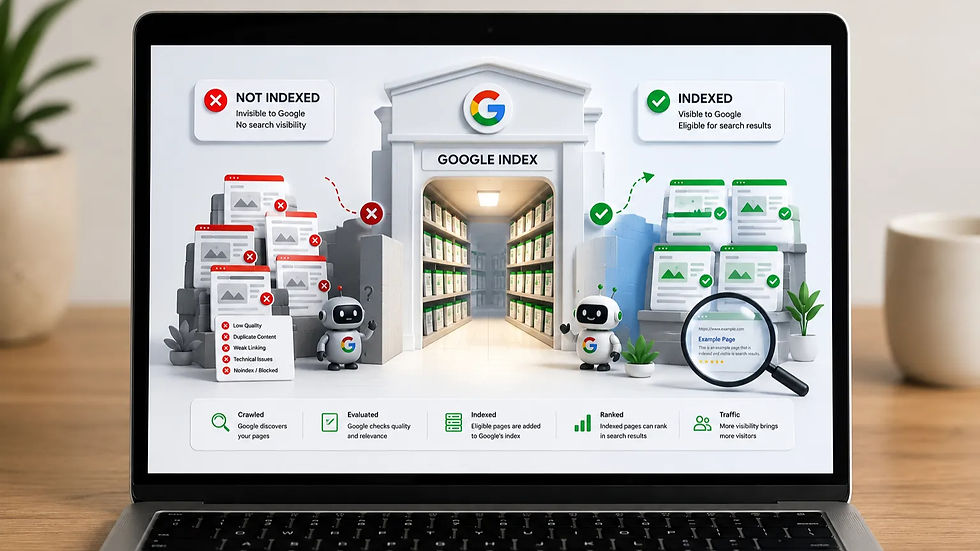
Technical SEO: Addressing issues such as crawlability, indexing, Core Web Vitals, site speed, mobile usability, and structured data.
If you're unsure how technical issues affect your website's visibility, read Why Your Website Isn't Getting Traffic from Google (And How to Fix It) for a deeper explanation.
On-page optimisation: Improving page titles, meta descriptions, headings, internal links, and content structure.
Authority building: Developing a sustainable strategy for earning quality backlinks and strengthening your site's credibility.
Performance tracking: Measuring rankings, traffic, conversions, and making ongoing improvements based on real data.
Rather than paying for isolated tasks, you're investing in a structured plan that helps every part of your SEO work move in the same direction.

Factors That Affect SEO Strategy Development Cost
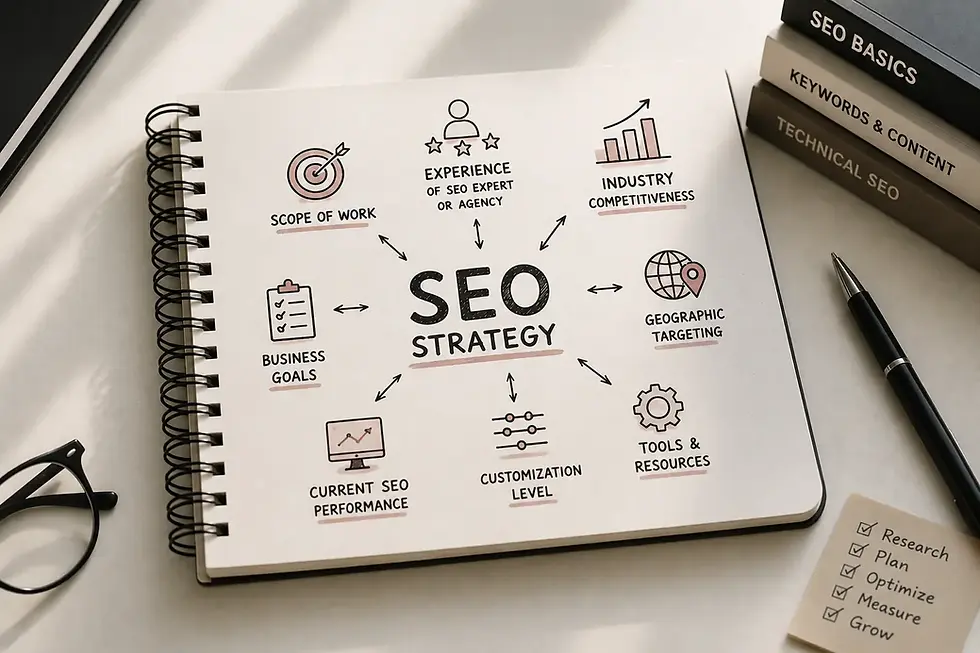
Now, let’s talk about the nitty-gritty. What exactly drives the price tag on your SEO strategy? Here are the main factors I always consider:
Scope of Work
Are you looking for a full-scale SEO overhaul or just a quick fix? A comprehensive strategy that covers everything from technical SEO to content marketing will cost more than a simple keyword audit.
Experience of the SEO Expert or Agency
Seasoned professionals with proven track records usually charge higher fees. But remember, you often get what you pay for.
Industry Competitiveness
If you’re in a highly competitive niche, expect to invest more. It takes more effort to rank well against established players.
Geographic Targeting
Local SEO strategies might be less expensive than national or international campaigns, but it depends on your target market.
Tools and Resources
Some SEO tools come with subscription fees. These costs might be included in your overall pricing or billed separately.
Customization Level
Tailored strategies that align closely with your unique business goals and customer journey will require more time and research.
Current SEO performance
If your website already has a solid technical foundation, the strategy can focus on growth. If there are indexing issues, duplicate content, or poor site architecture, additional work will be required before optimisation can begin.
Business goals
Your objectives matter. Ranking for local searches, increasing online sales, generating leads, or expanding internationally all require different strategies.
Understanding these factors helps you set realistic expectations and avoid surprises down the road.
Typical SEO Strategy Pricing
Now that we've explored what influences SEO pricing, let's look at what businesses can typically expect to invest.
The estimates below provide a general guide to common SEO services in Kenya. While pricing varies based on the scope of work, website complexity, and the expertise of the SEO professional or agency, these ranges can help you budget more confidently.
SEO Service | Typical Cost (KES) |
SEO Audit | KES 15,000 – 50,000 |
Keyword Research | KES 10,000 – 30,000 |
SEO Strategy Development | KES 30,000 – 100,000+ |
On-Page SEO Optimisation | KES 15,000 – 60,000 |
Technical SEO Optimisation | KES 20,000 – 80,000+ |
Local SEO Strategy | KES 20,000 – 70,000 |
Monthly SEO Management | KES 30,000 – 150,000+ |
Enterprise SEO | Custom pricing |
If you're working with an international freelancer, consultant, or agency, pricing is typically quoted in US dollars.
Provider | Typical Monthly Cost (USD) |
Freelancer | $300 – $1,500 |
SEO Consultant | $1,000 – $5,000+ |
SEO Agency | $2,000 – $20,000+ |
Enterprise Agency | Custom pricing |
It's important to remember that SEO isn't a commodity with fixed pricing. Two providers may charge very different rates, but the scope of work, level of expertise, reporting, and long-term value they offer can vary significantly. Rather than choosing the lowest quote, compare what's included and how the proposed strategy aligns with your business goals.

Disclaimer: The pricing above is intended as a general guide and may vary depending on your website, business goals, industry, and the scope of work required. When comparing SEO providers, look beyond the price and consider what's included in the strategy, deliverables, and ongoing support.
What is the 80/20 rule for SEO?
If you're working with a limited budget, the 80/20 rule can help you prioritise your investment.
The Pareto Principle suggests that roughly 80% of your results often come from 20% of your efforts. In SEO, that means focusing on the improvements most likely to generate meaningful results before trying to optimise everything at once.
For many businesses, those priorities include:
Fixing technical issues that prevent search engines from properly crawling or indexing the website.
Targeting high-intent keywords that are closely aligned with customer needs.
Optimising existing pages before creating large amounts of new content.
Improving page speed, user experience, and mobile performance.
Publishing high-quality, helpful content that demonstrates expertise.
By focusing on the highest-impact opportunities first, businesses can maximise their return on investment while keeping SEO costs manageable.
Practical Tips to Manage Your SEO Strategy Development Cost
If you're investing in SEO for the first time, these strategies can help you maximise your budget.
Start with an SEO Audit: Gain a clear understanding of your website's current performance, identify technical issues, and uncover opportunities before investing in further optimisation.
Set Clear Objectives: Define what success looks like, whether it's increasing website traffic, generating more leads, boosting online sales, or improving brand visibility. Clear goals help shape a more focused SEO strategy.
Prioritise High-Impact Improvements: Focus first on the changes that will deliver the greatest return, such as resolving technical issues, optimising existing content, and targeting high-intent keywords.
Invest in High-Quality Content: Create valuable, well-researched content that answers your audience's questions and demonstrates expertise. Quality consistently outperforms quantity in the long run.
Monitor and Measure Performance: Regularly track key metrics such as keyword rankings, organic traffic, user engagement, and conversions. Measuring results allows you to refine your strategy based on data rather than assumptions.
Think Long-Term: SEO is an ongoing process, not a one-time project. Consistently testing, learning, and improving your website over time is what drives sustainable growth and long-term search visibility.
SEO works best as an ongoing process of testing, learning, and continuous improvement.
Why Investing in SEO Strategy is Worth Every Shilling
A well-developed SEO strategy is more than a marketing expense. It's an investment in your business's long-term visibility and growth.
Unlike paid advertising, which stops generating traffic when the budget ends, SEO continues to deliver value long after optimisation work has been completed.
An effective strategy can help you:
Generate consistent organic traffic.
Build trust and credibility with potential customers.
Improve website usability and user experience.
Reduce long-term customer acquisition costs.
Increase qualified leads and conversions.
Strengthen your visibility in both traditional search engines and AI-powered search experiences.
As platforms such as ChatGPT, Google's AI Overviews, Gemini, and Perplexity increasingly shape how people discover information, modern SEO is no longer just about ranking on Google. It's about creating trustworthy, well-structured content that can be understood and referenced across multiple search experiences.
This shift is one of the reasons I believe businesses should think beyond rankings. In Why Ranking First on Google Is No Longer the Ultimate Goal for SEO Success, I explain how search visibility is evolving and why building authority matters more than simply reaching position one.
Taking the Next Step with Your SEO Strategy
SEO pricing isn't simply about the number on a proposal. It's about understanding the value behind the work.
A well-planned SEO strategy integrates technical optimization, keyword research, content planning, user experience, analytics, and ongoing refinement to attract the right audience, increase visibility, and support sustainable business growth.
Whether you're launching a new website or improving an existing one, investing in a tailored SEO strategy gives you a clearer roadmap for attracting the right audience, increasing visibility, and generating long-term results.
Rather than asking, "What's the cheapest SEO option?", ask, "Which strategy will deliver the greatest long-term value for my business?"
That's the question that leads to meaningful growth.


Comments