
After the Burial: Who Takes Care of the Children?

The funeral is full of people. The house is full of food. Hands hold hands. Voices soften. Someone makes tea. Someone says, “Be strong.”
Then the burial ends.
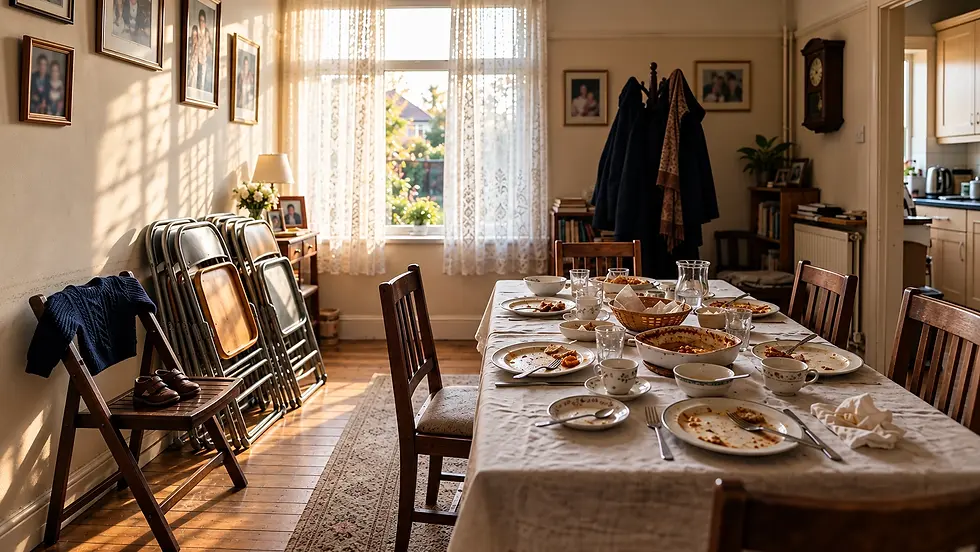
The chairs are stacked. The borrowed dishes return to their owners. The visitors leave in twos and threes. Life begins again for everyone else, or at least it looks that way.
But somewhere in the house, a child is still waiting for a parent who will not come back.
That is where the harder question begins. Not who cried at the funeral. Not who brought food. Not who stood beside the grave.
After the burial, who watches over the child?
The child does not grieve like the adults expect
Children do not always say, “I am grieving.”
A young child may not understand that death is final. They may ask when the parent is coming home. They may ask the same question ten times, not to annoy anyone, but because the answer is too large to hold.
An older child may understand the facts but not the weight. They may know the parent has died, then still look for them in a crowd. They may laugh at the wrong time. They may refuse to cry. They may become angry over small things. They may stop speaking in class. They may wet the bed again. They may lose interest in school. They may cling to one adult and reject another.
Grief often leaves the body before it finds words.
It can show up as:
sudden fear of being left alone
headaches or stomach aches with no clear cause
trouble sleeping
anger that feels out of proportion
silence
risky behaviour
school refusal
trying too hard to please adults
acting like a second parent in the home
Adults often call these things “bad behaviour.” Sometimes they are pain with no language.
Research on child bereavement and grief has long shown that children grieve in waves. They may play one moment and cry the next. That does not mean they are fine. Play can be a child’s way of resting from sorrow. Short bursts of grief do not mean shallow grief.
A child may revisit the loss at each new age. The death feels different at five, ten, fifteen and twenty-five. A girl who lost her mother at seven may grieve again when she starts menstruating, graduates, falls in love, gives birth, or faces illness. A boy who lost his father at nine may grieve again when he becomes a father himself. The loss grows with the child.
This is why we should be careful with the word resilience.
Children can survive many things. That does not mean those things did not hurt them. It does not mean they should be left to carry adult sorrow alone.
Funeral support is not the same as care
People know how to gather for death. Many communities do this well.
They cook. They clean. They sit through the night. They give money. They sing. They pray. They remember. They make arrangements. They hold the widow, the widower, the children.
This matters. Ritual matters. Burial matters. Public mourning matters.
Funeral support is not the same as long-term care. The people around a grieving family may disappear once the burial is over, even though the need for support continues. I explored this in If You’re Drowning, “Let Me Know If You Need Anything” Isn’t Enough, where I look at why meaningful support often requires more than offering help and waiting for someone to ask.
After a parent dies, a child still needs breakfast, school fees, clean clothes, transport, safety, medical care, bedtime routines, help with homework and someone who notices when they stop smiling.
The child needs answers.
Where will I live?
Will I stay in my school?
Who will come to parents’ day?
Who will sign forms?
Who will let me talk about my mother without changing the subject?
Who will let me miss my father without telling me to be strong?
For orphaned children after parental death, grief is never only emotional. It can change the whole structure of life. Housing can change. Schooling can stop. Siblings can be separated. Belongings can disappear. Adults can argue over property while the child sits outside the room, hearing everything and understanding enough to feel afraid.
Children also need permission to remember. They need adults who will say their parent's name, listen to their stories and allow them to keep talking about the person they lost. In The Different Ways We Remember Those We've Lost, I explore the many ways love and connection can continue after someone dies.
This is where child bereavement and grief becomes practical. Support for grieving children must include food, school, housing, safety and love. Long-term care for bereaved children cannot end with sympathy. It needs watchful adults, clear responsibility and protection from child exploitation after parental death, especially when relatives caring for orphaned children are under pressure themselves.
This is not only a family matter. It is a community and safeguarding matter. Grief follows a child into ordinary places, including school.

When relatives take children in
Many children survive parental death because relatives step forward.
An aunt makes space in a small bedroom. A grandmother stretches her pension. An older cousin walks the child to school. An uncle becomes the one who teaches them to ride a bicycle. A family absorbs one more mouth, one more uniform, one more grief.
This kind of love is often quiet. It rarely receives applause. It deserves respect.
But love is not the only story.
Some children are taken in and then slowly turned into workers. They are told they should be grateful. They cook before school. They clean after everyone sleeps. They care for younger children instead of doing homework. They eat last. They wear hand-me-downs while other children in the home are treated differently. They are reminded that they are a burden.
Sometimes the language is soft.
“Help around the house.”
“Earn your keep.”
“Don’t forget who is feeding you.”
Sometimes it becomes open cruelty.
The child becomes the maid, the errand runner, the silent one. Their grief is treated as an inconvenience. Their education becomes optional. Their belongings are taken. Their parent’s memory is used to control them.
This does not happen in every home. It must not be used to shame all relatives who care for bereaved children. Many do the work with tenderness and sacrifice.
Still, we must name the danger.
Parental loss can make a child vulnerable. The child may fear being sent away. They may stay silent about mistreatment because they have already lost too much. They may believe they have no right to complain. They may think, “If I become useful, they will keep me.”
That thought can shape a life.
A child who learns that love must be earned may become an adult who overworks, over-apologises, and accepts poor treatment. A child who had to become “mature” too soon may struggle to rest without guilt. A child praised for being strong may learn to hide every need.
We should ask better questions when a child moves into another home after loss.
Not only, “Who took the child?”
Ask:
Is the child still in school?
Does the child have time to play?
Are siblings allowed contact?
Who manages any money left for the child?
Does the child have a safe place to sleep?
Is the child treated the same as other children in the home?
Is there an adult outside the home checking in?
Can the child speak freely without fear?
A roof is not always a home. Food is not always care. Survival is not always safety.
We live in societies that struggle to speak of death
An article in The Guardian titled “We live in grief-phobic societies” explored a truth many families know in private. Many adults are uncomfortable with death. They avoid the words, rush grief and tidy pain into phrases:
“He is in a better place.”
“Don’t cry.”
“God knows best.”
“Be strong for your mother.”
“Your father would not want you sad.”
These words may come from love. They may also close the door on the child’s grief.
Children notice what adults cannot bear to discuss. If death becomes a forbidden subject, the child learns to grieve alone. If every mention of the dead parent makes the room tense, the child stops mentioning them. If adults only praise quietness, the child hides distress.
A grief-phobic society does not remove grief. It drives it underground.
Children need honest language. Not brutal language. Honest language.
“Your mother died.”
“Your father’s body stopped working.”
“She cannot come back, but we can still talk about her.”
“You did not cause this.”
“You are not responsible for fixing the adults.”
“I am here. I will keep showing up.”
Those sentences matter. They give the child ground to stand on.
Faith communities can help here when they make room for lament, not only victory. Schools can help when they tell teachers that grief may look like anger or distraction. Health workers and counsellors can help when they support the adults around the child, not only the child. Neighbours can help by staying present after the first week, the first month, the first anniversary.
This article is not medical, legal or financial advice. It is a call to pay attention. When a child’s safety or wellbeing is at risk, protective services and qualified professionals should be involved.

Losing parents changes adulthood too
I did not lose my parents as a small child. I lost both of them as a young adult.
That difference matters. I had words. I had memories. I had some shape of self already formed. I could name death. I could attend the burial and understand the silence that followed.
Still, losing both parents changed me.
It changed how I entered rooms. It changed how I understood safety. It made ordinary questions feel heavy.
“Where are your parents?”
“What does your mother think?”
“Will your father be there?”
People ask these questions casually because, for many people, parents remain part of the background of life. Even strained relationships leave a reference point. After both parents die, the background changes. You can feel unanchored in ways that are hard to explain.
There are moments when grief is loud. Birthdays. Holidays. Illness. Good news with no one to call. Bad news with no one to fall back on.
There are also quieter moments. Watching someone complain about a parent’s phone call and feeling envy. Seeing an older person in the market and remembering a hand, a voice, a smell. Making a decision and realising there is no parent to approve, warn, bless or disagree.
As a young adult, I learned that grief does not end because life continues. It travels. It enters relationships. It affects trust. It can make love feel precious and frightening at the same time. It can make you independent in ways people admire, while also leaving parts of you tired.
That experience makes me think often about children who lose parents much earlier.
If parental loss can shake a young adult who has language, history and some independence, what does it do to a child who still needs help tying shoes, reading instructions, crossing roads, managing fear and understanding the world?
We cannot ask children to carry what even adults struggle to hold.
What watching over a bereaved child requires
Watching over a grieving child is not one grand act. It is repeated care.
It is the relative who keeps the child in school, the teacher who asks what changed at home before punishing them, and the neighbour who notices the child is always carrying water or babysitting instead of playing.
It is the faith leader who reminds the family that caring for an orphaned child is not the same as using the child. It is the social worker, counsellor or child protection worker who listens without dismissing the child as ungrateful.
And it is the adult who says the dead parent's name, remembers the anniversary, asks about food, sleep, school and fear, and does not turn the child into a symbol of courage.
There are practical ways to protect a child’s childhood after loss:
Keep routines where possible.
Tell the truth in age-appropriate language.
Let the child ask questions more than once.
Protect playtime.
Keep siblings connected where safe.
Watch for unfair labour in the home.
Make sure school attendance continues.
Keep records of property, benefits or inheritance meant for the child.
Create safe adults outside the household.
Seek professional help when grief affects daily life in serious ways.
No single person can do everything. But someone must carry responsibility. Grief becomes more dangerous when everyone assumes someone else is handling it.

The child should not lose childhood too
A child who loses a parent has already lost enough.
They should not also lose school.
They should not lose play.
They should not lose safety.
They should not lose their voice.
They should not lose the right to be cared for without having to earn it.
We honour the dead poorly when we neglect the children they loved. We cannot bring back the parent. We can protect what the parent would have wanted protected. The child’s body. The child’s mind. The child’s future. The child’s right to remain a child.
The burial is not the end of communal duty. It is the point where the quiet work begins.
After the songs fade, after the visitors go home, after the grave is covered and the house becomes still, the child remains.
So the question must remain too.
After the burial, who is still watching over the child?


Comments